Green Cell AGM Gel 12V 22Ah vs VIPOW 12V 17Ah AGM Gel
We compare the Green Cell AGM Gel 12V 22Ah and the VIPOW 12V 17Ah AGM Gel across every dimension that matters - our scores, the key specs, and how each performs on the things you will actually notice day to day.
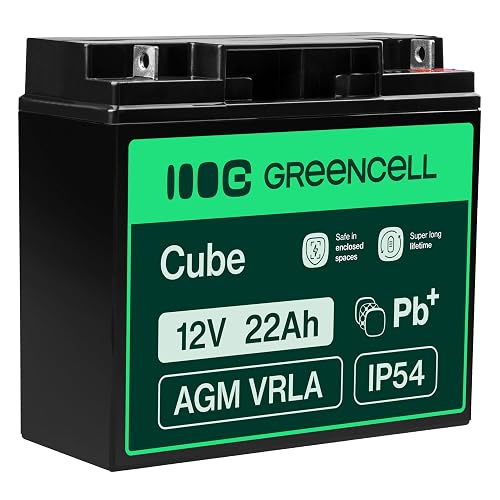

At a glance
| Green Cell AGM Gel 12V 22Ah | VIPOW 12V 17Ah AGM Gel | |
|---|---|---|
| Our score | 6.6/10 | 7.8/10 |
| Best for | Dependable, affordable off-grid power for caravans, motorhomes and boats | Dependable, affordable off-grid power for caravans, motorhomes and boats |
| Not ideal for | Heavy daily cycling where lithium's longer life would pay back | Heavy daily cycling where lithium's longer life would pay back |
| Brand | Green Cell | VIPOW |
Battery Type and Chemistry
Green Cell AGM Gel 12V 22Ah
Battery type and chemistry affect how the leisure battery stores and releases energy. This model is a sealed lead-acid, deep-cycle unit using AGM and gel-style construction, which is designed for repeated discharging over time rather than short cranking bursts typical of starter batteries. The sealed design reduces the need for topping up because fluids are contained internally, making it suitable for indoor or enclosed equipment use, where movement is limited. The lead-acid chemistry also means charging should follow the battery requirements, because an incompatible charge profile can reduce performance over time.
VIPOW 12V 17Ah AGM Gel
Battery type and chemistry matter because they determine how a battery is intended to handle charging and regular daily use. The leisure battery unit is described as a 12V, 17Ah AGM gel battery, which indicates a sealed lead-acid design. AGM gel types are described as maintenance free, suggesting fewer user tasks related to upkeep. As a sealed chemistry, ventilation is not expected. Charging performance depends on using a charger that matches the battery's requirements.
Capacity and Real Usable Power
Green Cell AGM Gel 12V 22Ah
With a 12V 22Ah rating, the Green Cell unit is intended to deliver usable runtime that varies with how quickly the load draws power. The 22Ah figure is a guide rather than a fixed promise, because real output depends on demand. When a device draws current steadily and moderately, more of the battery's stored energy can be converted into useful runtime. When a load draws higher current, the voltage can sag sooner, so usable power may end earlier than expected. For practical planning, runtime should be matched to the expected current draw and required duration.
VIPOW 12V 17Ah AGM Gel
Capacity, shown as 17Ah (amp-hours), indicates how much current the battery can supply over time under a specified test load, which helps estimate how long a mobility scooter can run before needing a recharge. This unit is rated at 12V and 17Ah, so usable energy depends on how the scooter draws power. Higher speeds, steep routes and frequent starts increase demand, which can reduce real-world runtime. Buyers should treat 17Ah as a baseline from lab conditions, because actual usable power varies with load and system voltage sag.
Cycle Life and Durability
Green Cell AGM Gel 12V 22Ah
Cycle life and durability matter because they determine how many charge-and-discharge cycles a deep-cycle battery can handle before its usable capacity declines. The leisure battery is a sealed lead-acid deep-cycle model, which is designed for repeated cycling rather than short, high-current cranking use. Battery lifespan is affected by how deeply the battery is discharged, as frequent deep discharges increase wear in lead-acid and gel designs. Temperature also influences ageing, since high heat can accelerate deterioration of the internal plates and gel structure. Proper charging and handling support long-term durability, but cycle-life performance beyond these general factors cannot be confirmed from specifications alone.
VIPOW 12V 17Ah AGM Gel
Cycle life and durability matter because a deep-cycle battery is expected to handle repeated charge and discharge cycles, particularly for daily mobility scooter use. In the case of the VIPOW, the manufacturer type suggests it is made for cycling rather than brief bursts. Over time, durability depends on how consistently the battery is kept within safe operating conditions, including avoiding deep depletion where possible. If the battery is regularly left to run very low before recharging, overall life can shorten faster. More consistent charging routines and stable storage help performance remain predictable.
Fitting and Charging
Green Cell AGM Gel 12V 22Ah
Proper fitting and charging are key to getting steady performance from the Green Cell AGM Gel 12V sealed lead-acid deep-cycle battery, because installation errors and poor charge habits can shorten usable life even when the unit is maintenance free. The battery should be secured firmly so it cannot move, and cables must be connected to the correct terminals, red to plus and black to minus. A compatible charger must be used, and charging should finish fully before the battery is put back into use. Leaving the battery partly charged for long periods can reduce capacity over time, especially in cold weather.
VIPOW 12V 17Ah AGM Gel
For safe use, the leisure battery should be fitted and charged carefully. Deep-cycle batteries perform best when they are installed correctly and recharged in a controlled way. Mount the battery securely in the scooter's battery space, keep the terminals clean and dry, and route the cables so they do not strain. Charging works best when the charger matches the battery type, and charging should be stopped when the charger indicates completion. Avoid overheating and do not mix chargers or batteries, as misuse can shorten service life. If the unit was stored cold, delay charging until it reaches room temperature.
Who Is This For?
Green Cell AGM Gel 12V 22Ah
The Green Cell sealed lead-acid deep-cycle battery suits buyers who want a maintenance-free, rechargeable 12V power source for steady, longer-duration discharge applications. It is a practical choice for mobility and smaller off-grid or backup setups such as UPS, toy cars, alarms, scooters, and fish finders, where a sealed battery helps keep installation simpler in limited spaces. This model is intended as a deep-cycle leisure battery rather than a starter battery for short, high-current bursts. It may be less suitable for applications that require large power demands or rapid recharge performance.
VIPOW 12V 17Ah AGM Gel
Who the VIPOW 12V 17Ah AGM battery is most suitable for depends on the mobility scooter's power requirements and on how the battery is cared for. It suits mobility scooter owners who need a deep-cycle, 12V, 17Ah replacement battery and prefer a maintenance-free style. It also fits buyers seeking a simple, dependable replacement after confirming the scooter's original battery matches these key ratings, because compatibility is not guaranteed by size alone. For anyone storing the scooter for long periods, careful handling is important, since battery deterioration risks can still occur even when performance remains stable.
Green Cell AGM Gel 12V 22Ah: pros
- AGM deep-cycle
- 22Ah at 12V
- Suits mobility
- Maintenance-free
- Proven, affordable off-grid power
Cons
- Only around half the rated capacity is safely usable
- Heavier and shorter cycle life than lithium
- Match the capacity to your real daily power draw
VIPOW 12V 17Ah AGM Gel: pros
- AGM deep-cycle
- 17Ah at 12V
- Suits mobility
- Maintenance-free
- Proven, affordable off-grid power
Cons
- Only around half the rated capacity is safely usable
- Heavier and shorter cycle life than lithium
- Match the capacity to your real daily power draw
Our verdict
Our pick is the VIPOW 12V 17Ah AGM Gel (our score 7.8/10) - A practical leisure battery (AGM, 17Ah) for off-grid and leisure power. The Green Cell AGM Gel 12V 22Ah is still worth it if it is cheaper when you check, or if it better matches your specific needs.